
Juan Carlos Escanciano

Juan Carlos Escanciano is a Professor of Economics and Research Chair at Universidad Carlos III de Madrid, specializing in econometric theory and its applications. He received his Ph.D. in Economics from Universidad Carlos III de Madrid in 2004 and has held academic appointments at Universidad de Navarra and Indiana University, where he was a tenured Full Professor from 2006 to 2018. He has also held visiting positions at Yale University, Cornell University, the University of Rochester, and MIT. His research focuses on semiparametric and nonparametric econometrics, identification, estimation, and specification testing, with applications in financial econometrics, risk management, and empirical asset pricing. Professor Escanciano is a Fellow of the Journal of Econometrics and serves as Associate Editor of Econometric Theory, Econometric Reviews, and the Journal of Business and Economic Statistics, as well as Senior Co‑Editor of Advances in Econometrics.
Ivan Fernandez- Val

Iván Fernández‑Val is a Professor of Economics in the Department of Economics at Boston University and a leading scholar in econometric theory and applied econometrics, with particular expertise in panel data models, distributional and quantile methods, and causal inference. He earned his Ph.D. in Economics from the Massachusetts Institute of Technology and has held visiting positions at institutions including New York University, University College London, CEMFI, and EIEF. Professor Fernández‑Val plays a major editorial role in the profession, serving as Co‑Editor of The Econometrics Journal and previously as Associate Editor for journals such as Econometric Theory, Journal of Econometrics, and the Journal of Business & Economic Statistics. His influential research includes foundational contributions to nonlinear panel models, distribution regression, counterfactual analysis, and the integration of machine‑learning methods into econometric inference, with important applications in labor economics and inequality.
Hashem Pesaran

M. Hashem Pesaran is Emeritus Professor of Economics at the University of Cambridge, Professorial Fellow of Trinity College, and Distinguished Professor Emeritus of Economics at the University of Southern California. He earned his Ph.D. in Economics from the University of Cambridge and is one of the most influential econometricians of his generation. His research spans time‑series and panel data econometrics, long‑run structural macroeconometrics, and global macro‑financial modeling, with seminal contributions to dynamic heterogeneous panels, cross‑sectional dependence, panel unit root and cointegration testing, and the analysis of global economic interdependence. Professor Pesaran is the originator of the Global Vector Autoregressive (GVAR) framework, now widely used by central banks and international institutions such as the IMF, ECB, and World Bank to study international spillovers and systemic risk. He is the founding editor of the Journal of Applied Econometrics and a Fellow of the British Academy, the Econometric Society, and the Journal of Econometrics. Recognized globally for his profound impact on the field, he has received numerous honors, including the Royal Economic Society Prize and designation as a Thomson Reuters Citation Laureate in Economics.
Yuya Sasaki
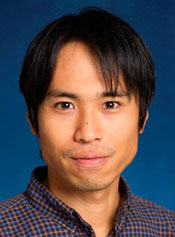
Yuya Sasaki is the Brian and Charlotte Grove Chair and Professor of Economics at Vanderbilt University, with appointments in the Department of Economics and the Data Science Institute. He is a leading econometrician whose research focuses on econometric theory, panel data models, causal inference, and high‑dimensional and machine‑learning methods. He earned his Ph.D. in Economics from Brown University and has established an influential research agenda addressing identification, estimation, and inference in dynamic and nonlinear panel data settings, including models with heterogeneity, limited variation, and measurement error. Professor Sasaki’s work includes fundamental contributions to inference with clustered and dependent data, slow‑moving and irregularly spaced panels, and the integration of modern machine‑learning tools into econometric inference. He plays a central role in the profession as Editor‑in‑Chief of Econometric Reviews and has served on the editorial boards of leading econometrics journals. Through both his methodological innovations and editorial leadership, Professor Sasaki has made significant contributions to advancing modern econometric practice.